Extending Wear For Audio Wearables
Project Open is an audio form factor designed to improve the shortcomings of current headphones and earphones.
Role
Lead Product Designer and Filmmaker
Team
- Caleb Aguiar
- Alexander Akande
- Kyo Fan
- Meera Divecha Forespring
- Hannah Hatchett
Advisors
- Led the main prototyping and 3D modeling for nearly 20 iterative concepts.
- Contributed to nearly 30 trials of user testing to adjust designs for over 94 potential ears.
- Developed a branding and pitch video demonstrating the headphones' interactions.
Timeline
4 weeks
So, what's the problem?
Today's audio wearables fail to deliver consistent comfort and performance across real-world use. Earbuds trap heat and moisture, fall out, or cause pain, while over-ear headphones are bulky and heavy for extended wear. What's the solution and middleground?
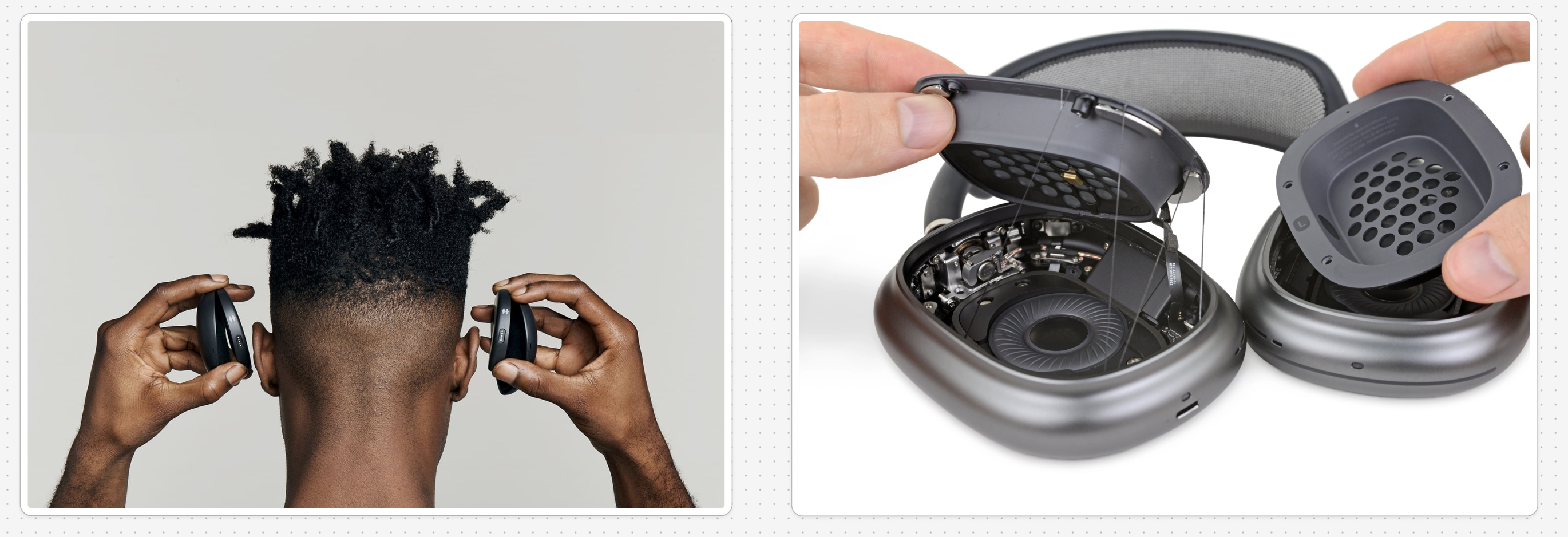
My team of design friends and I came together to try and address these frustrations with a new form factor design that maintains continous comfort, while mitigating the common issues seen in typical audio form factors.
This project ended up turning into a big lesson on team dynamics, team management, and learning on the fly to create a high quality product. Collectively we all had interests in wearable devices and we thought there could be something within the audio space, however we had little to no experience in industrial design.
Building out the problem list
To narrow down our problem space, I insited on gathering heuristic assumptions firstly, then validating those assumptions with research. Our assumptions were around comfort and general frustrations like ear pressure, heat build-up, and instability. These needed to be validated, of course; maybe through some user research?
Conducting user interviews to understand the problem space
The interviewees we recruited were from people around the UW MHCI+D cohort, and a few relatives and friends. The questions at first were generally written along the lines of "why do you wear headphones" and "walk me through your experience with... " and as the interview evolved we honed in on more specific questions or assumptions we had from our own heuristic analysis of most headphones (the aching, moisture collection, etc..).
After the interview process, we began synthesizing the transcribed portions and applying an empathy map model to each sentence or phrase we found in common, with a goal of finding a problem space with common issues. We chose the empathy map method because of its effectiveness in identifying obvious painpoints and outlining common emotional themes we may have missed during the interviews.
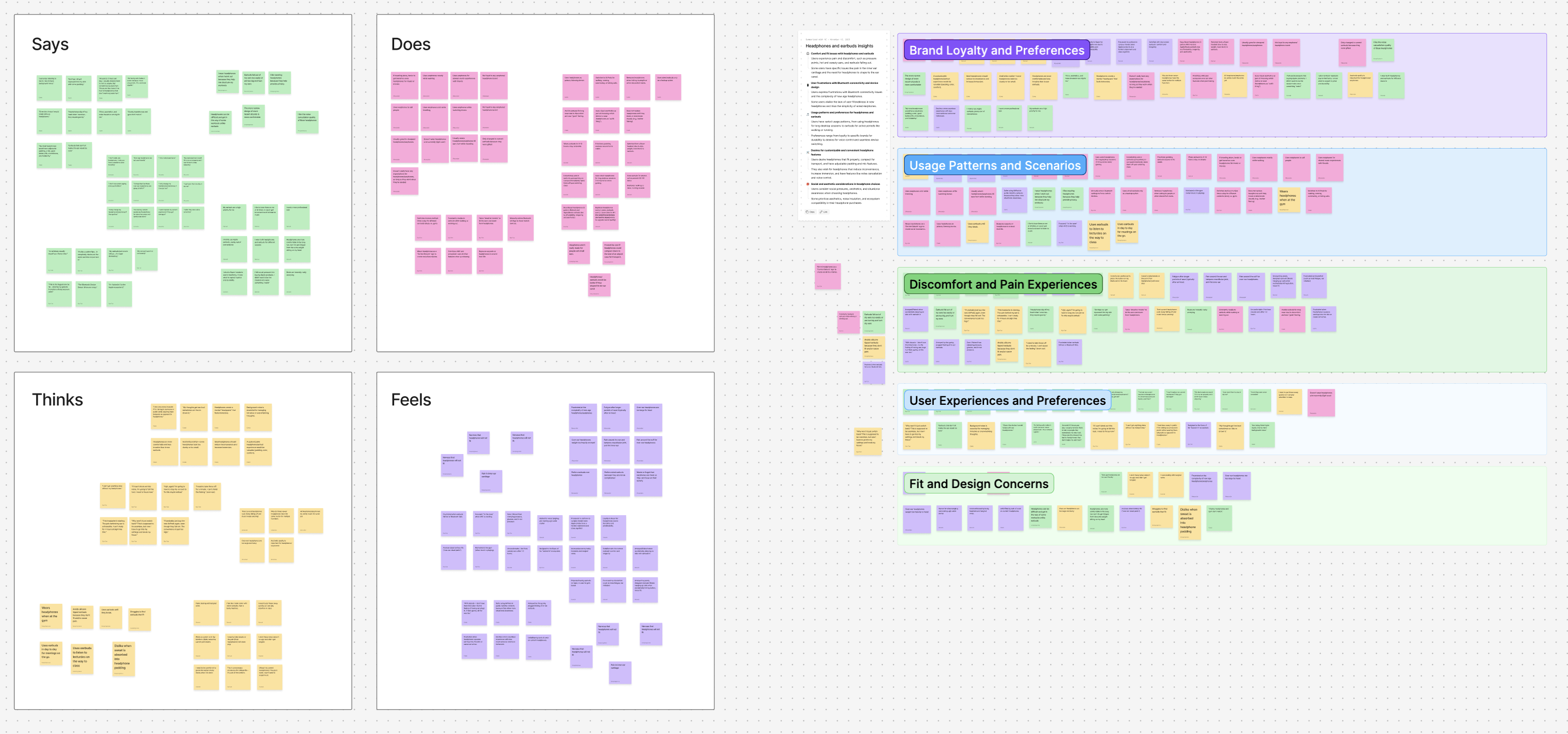
So, by using these empathy maps and some AI analysis from Figma itself, we identified several core findings that validated our assumptions.
The AI assistance aided in finding common themes across all phrases we collected, but to hold the AI accountable we searched through each common theme to make sure there was validity. If validity did not exist, we would create our own theme around the excess—if need be.
From these findings we created a few how might we's that could lead us to designing a product.
Note: How might we's wording was slightly changed from original research to fit the story better, but the goal is still the same.
Ideation & Strategy
Out of the selection, we chose: "How might we design headphones that are lightweight, portable, and comfortable (even with a degree of variance e.g. wearing glasses)?"
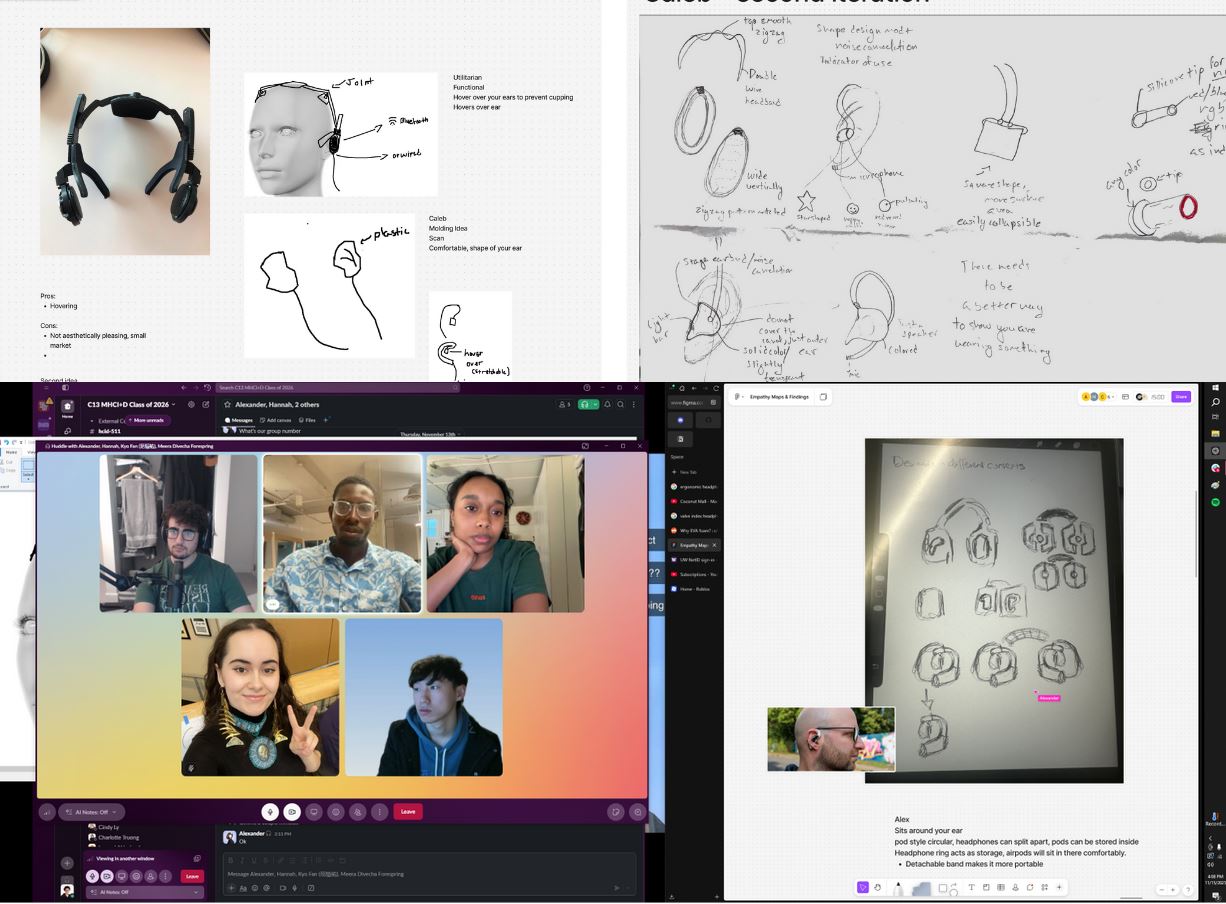
Sketching From Inspiration
We centered many of our inspirational material around things we found on the internet and sketches we conjured up ourselves. Personally, I went after VR headsets which allowed for over-ear hearing much like what you see on the Valve Index, which was actually one of my references. These headphones don't exactly sit on your ear, but have the same quality as regular open-back headphones.
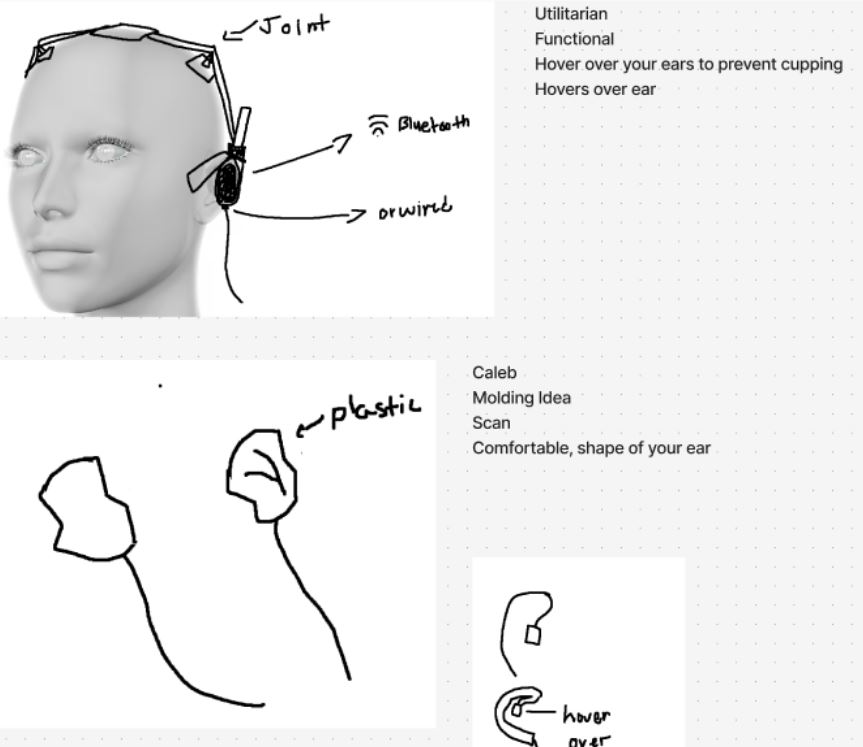
Many of my teammates thought the utilitarian idea was striking, but a little too controversial for the public. The joint system I built could work for all head sizes, however aesthetically it looks quite annoying to view and may add head pressure, which is where we want to move away from when focusing on our HMW.
So I went Bandless...
The Bandless Pivot: The idea of a bandless headset kept returning during ideation. Inspired by VR headsets that hover speakers over the ears rather than pressing on them, we realized that removing the band was the ultimate way to achieve a truly lightweight, comfortable form factor. After much deliberation and indecisiveness about how we can get a bandless headset on someone's ears without it falling off—while maintaining audio quality heard on headphones—we decided to just "yolo" it as some of us have said. In actuality, we split as a group to find out if we could still add in a headband just to make our designing lives easier. It did not.
Prototyping & Iteration
Transition to 3D Iteration
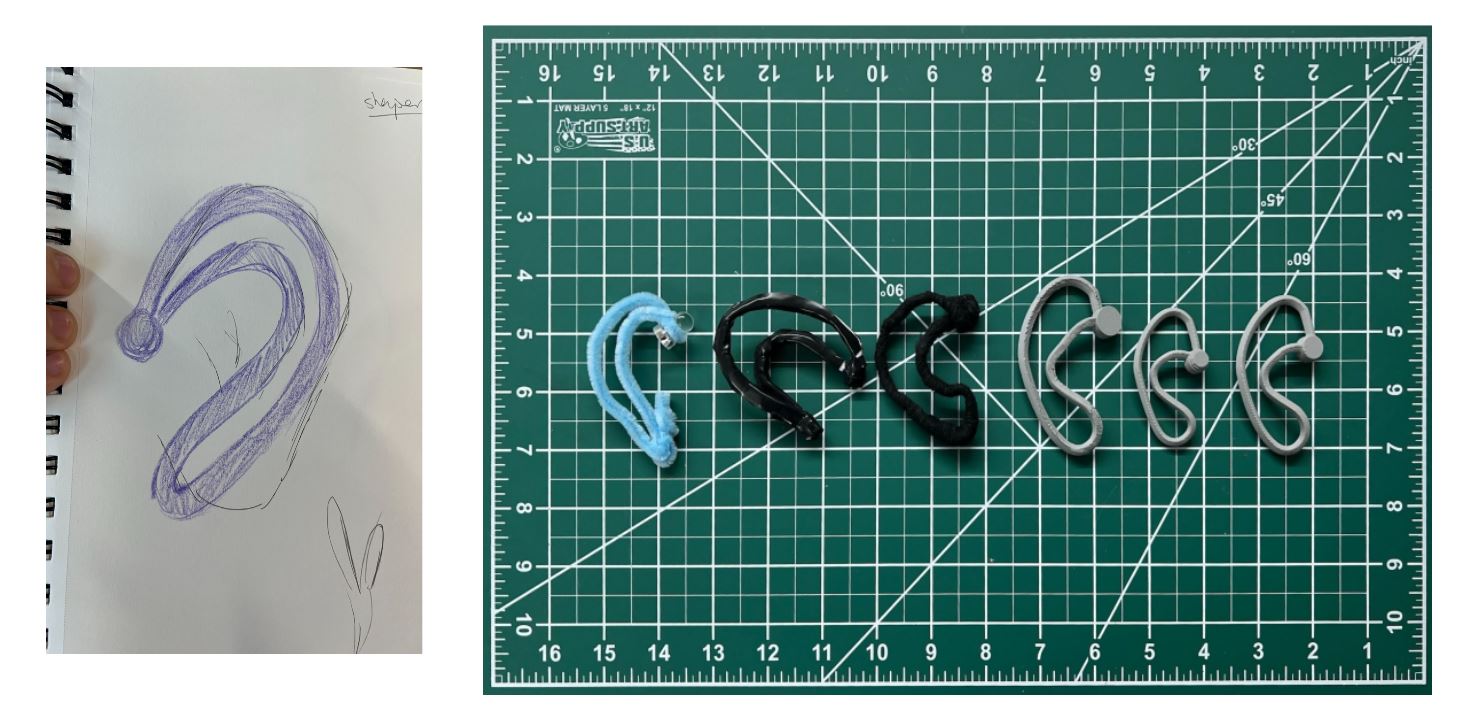
I started with the foundation: how it will wrap around the ear. I created my first blender modeling project and iterated over and over again after a design one my group members made (Meera). A few of our group members delegated themselves to read some articles on common ear sizes, which influenced how I shaped the curves on the 3D model. Many bumps exist on the ear, different lobe types as well, so I needed to be inclusive of many of those attributes. The large circle on the right of the 3D model acted as a counter weight for the ear—alleviating the weight from pushing onto the back of the ear, which feels uncomfortable.
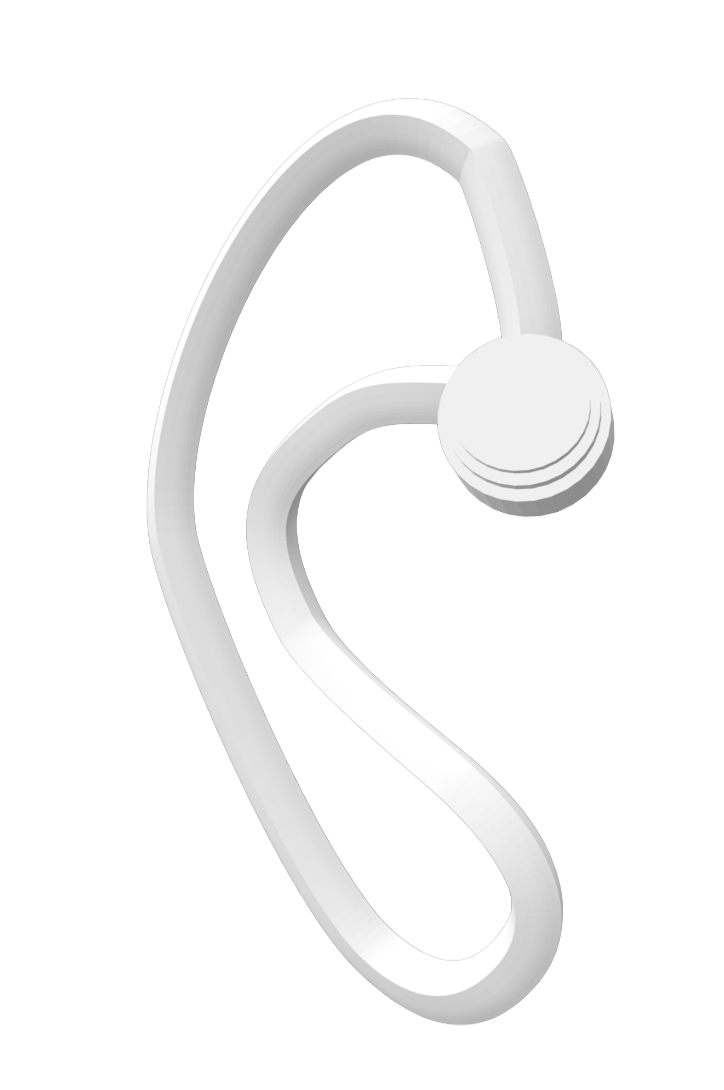
Early 3D Models (The Ear Wrap): Initial 3D-printed iterations focused on a foundation that wrapped tightly around the inner ear.
The Pivot: While structurally a good start, the execution failed in user testing. The rough 3D printing filament created harsh edges, causing sharp pain just from putting the device on. The difficulties about this design was figuring out where to put the speaker head and how to put on the headphone foundation with ease. I had the foundation created but attaching a speaker seems so counter intuitive in this state, at the time and putting it on was causing some skin irritation. By this moment in time we had already eaten through three weeks and needed to come up with other ideas quickly. Iteration with 3D was also slow. It wasn't my first time messing around with 3D printing, however each print took quite some time due to the traffic each printer was having.
The Donut Concept
As I was stuck on this design; stuck on the simplicity of taking it on and off. Other group members worked on a design that was incredibly easy to put on and take off.. However, it could easily pop off the ear given enough bump. They called it the donut, however what was appealing to me wasn't the casing around it, but the foundation. There's no inner-ear support. Putting it on was quite literally dropping it on the top of your ear.
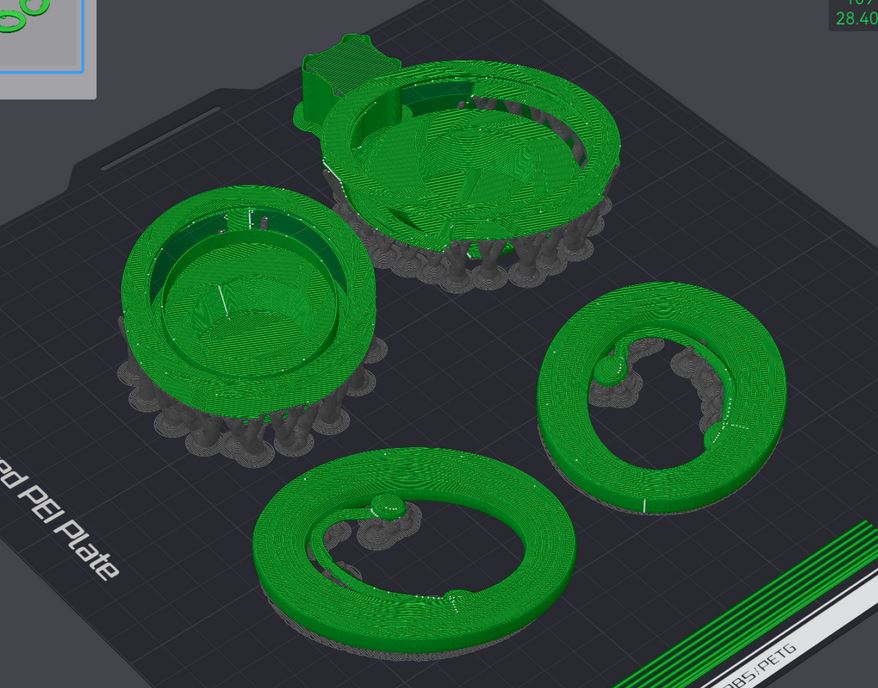
Remix
I took the idea of removing the inner sections of my foundation from the donut concept, which seemed to work flawlessly. Putting it on and taking it off became even easier than expected.
During this process a breakthrough occurred and we called it the "Tri Axis Support". We merged concepts by keeping the open-ear "donut" foundation but introducing "tri-axis support cylinders" to help alleviate the weight distribution across the ear itself.
My Rationale: By adding foam to these cylinders, they acted as padding that gently pushed against the ear and cranium. This pressure was just enough to keep the entire device highly secure without needing invasive inner-ear support and would allow pressure to move from the ear and instead onto the side of the head itself.
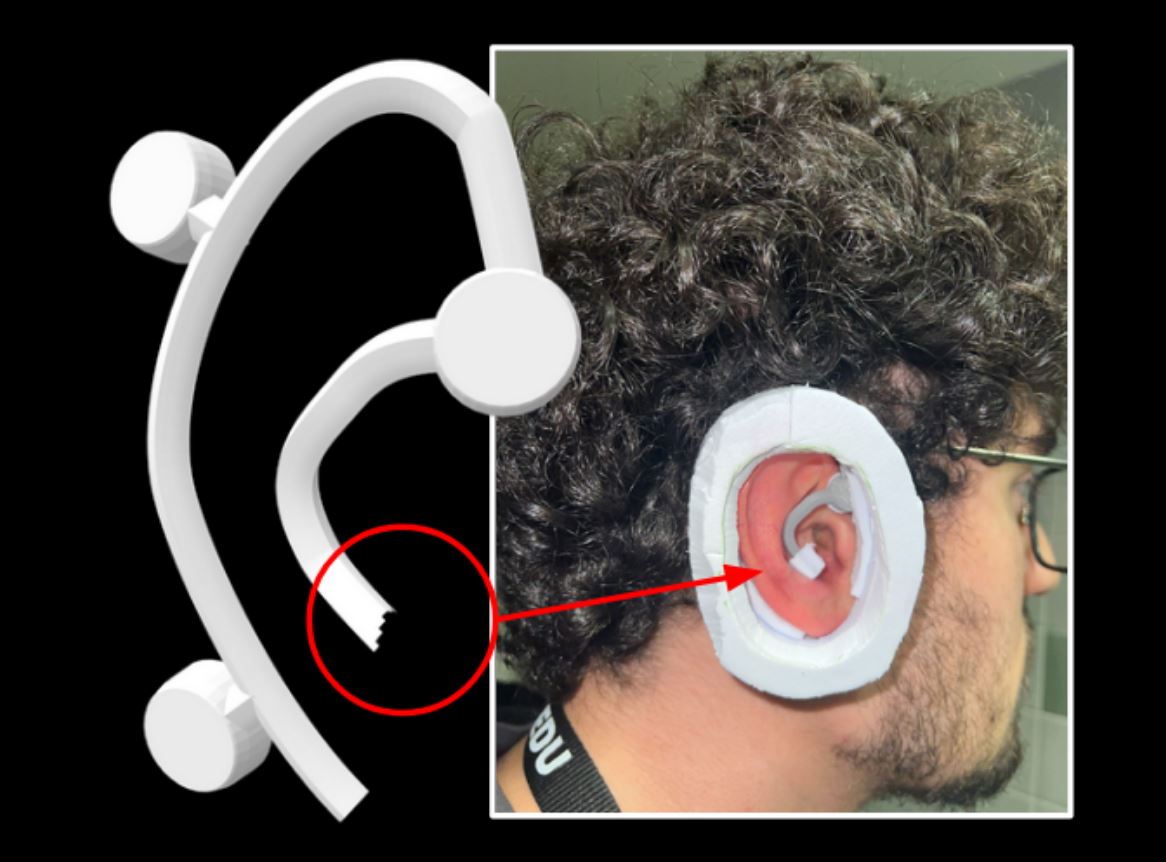
So I cut the inner bit of the ear foundation out, completely. And as it turns out, the cylinder support I created actually does more than originally thought. Those cylinders with foam, acting as padding between the cranium and headphone prototype, push against the ear and cranium just enough to keep the whole device extra-secure.
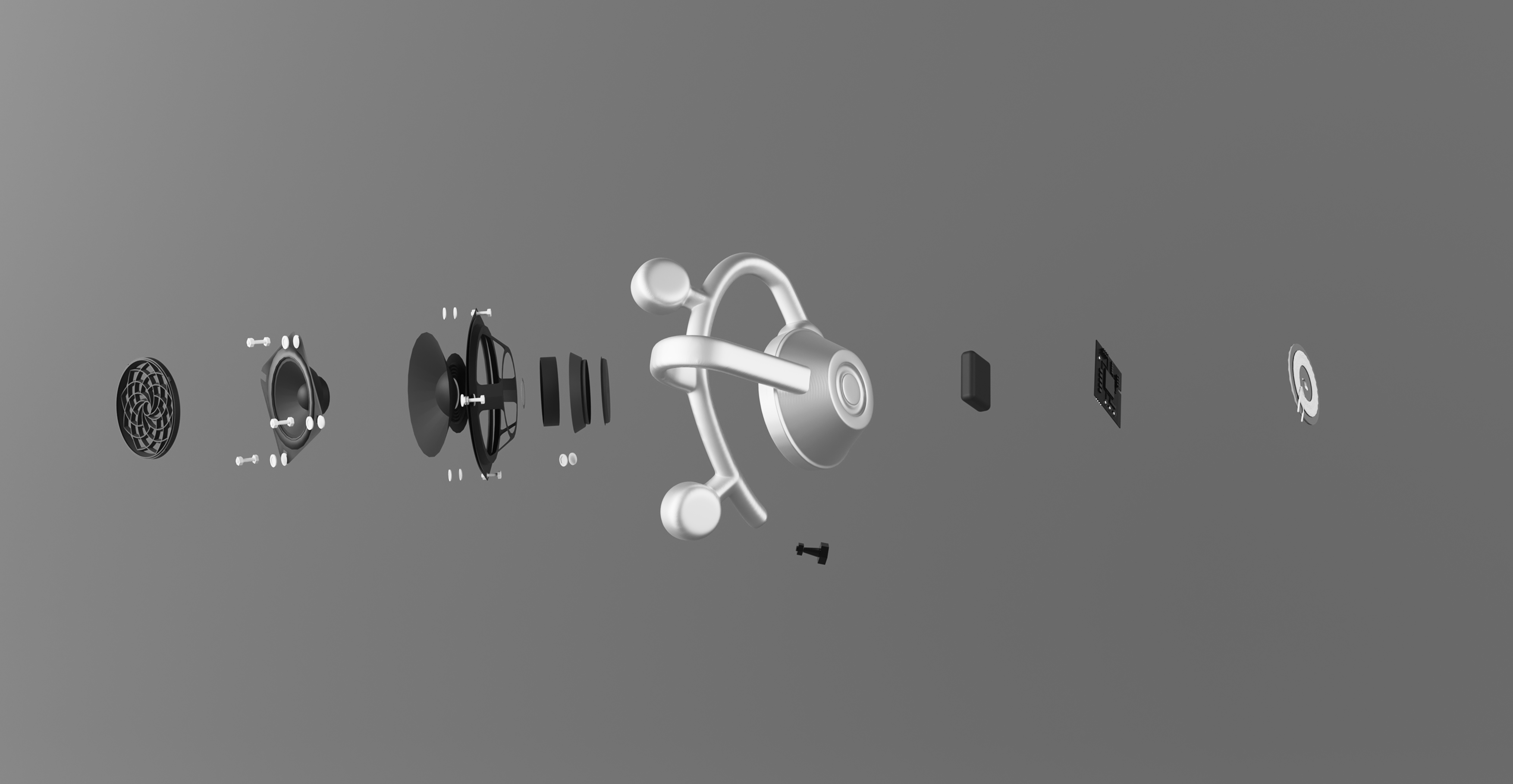
This was it. I modeled a speaker with holes for wiring that sat right above the ear. The team as a whole found this method much more impactful due to its ease to put on and the comfort—while still allowing earrings and other peripherals.
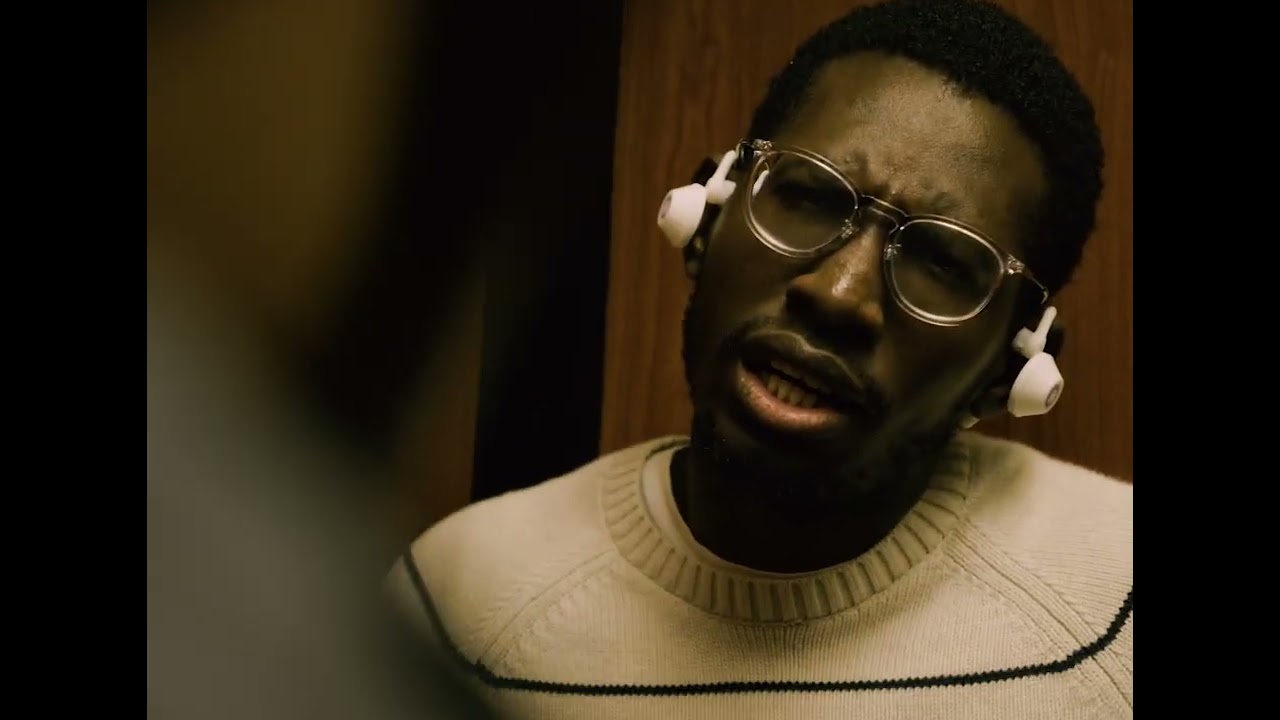
"I left it on for the whole day accidentally while filming the video and I kept forgetting they were on me.. it's super comfortable."
Alexander Akande

Final Solution & Specifications
- The Design: A highly comfortable, small, bandless headset that avoids pressure points and is printed in different sizes to accommodate all users.
- Materials: Constructed from PTB Plastic to ensure a durable and lightweight fit.
- Battery: Equipped with a 105mAh Lithium Polymer battery per earphone, offering 11 hours of life with 1-hour charge times.
- Audio Tech: Features beamforming microphones on the bottom tip and inner speakers to isolate the user's voice and cancel background noise. Uses bluetooth to connect to the user's phone.
These "headphones" are perfect for commuting publicly and comfort. It lets you have the quality of headphones with the convenience of earbuds.

Reflection
Moving forward, I would have loved more time to flesh out the design further, particularly the interior of the form factor. My teammates had established viable interior chips by the end of the project, but we only had about two days to work with them. A significant portion of our time was also consumed by repeated printing iterations to nail the tiered fits, which cut into valuable design time.
From the start, I wanted these to work well for casual and commuter use, comfortable enough to wear outside while still letting you hear your surroundings. One thing I failed to account for, though, was aerodynamics. The design handled them poorly; at even a brisk running pace, wind noise would drown out the music entirely. It's something I didn't have the time to address.
On a brighter note, our main actor wore Project Open throughout the entire video shoot for three days, only taking them off after shooting finished (which was usually 7 hours long!). To me, that speaks to the comfort we were aiming for. Hell, I can't even wear my AirPods for more than 2 hours without them falling out or becoming uncomfortable from the moisture they trap.
— Caleb Aguiar